













GREEN BELT
SELF DEFENCE
Green Belt
'A black belt is simply a green belt that did not give up.'
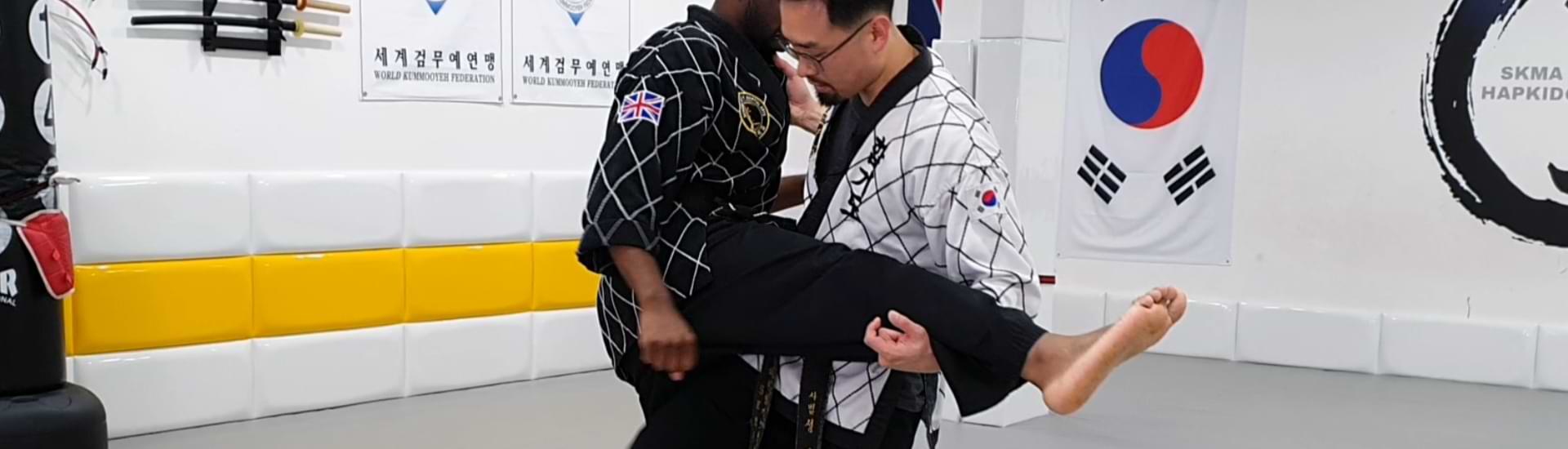
As we progress to the Green Belt level in Hapkido, we delve into more advanced self defence techniques. One important aspect of self defence we focus on is defending against punches. At this level, we learn the fundamental principles and strategies for effectively countering and redirecting an opponent's punch.
When confronted with a punch, our primary objective is not to directly oppose our opponent's force but rather to redirect it.
This approach allows us to maintain control of the situation and create openings for counterattacks.
Mastering punching defence at the Green Belt level enhances our ability to respond effectively in real-life self defence situations.
Green Belt Course
Price £ 59.99
The Green Belt Course is once again brought to you by Master Sung 7th Dan Hapkido, and it includes all the knowledge you need to prepare for certification to Senior Green Belt. Like all our courses, there are easy-to-follow and clear instructions from Master Sung, multi-angled videos, and close-ups of the fundamentals of Hapkido and the basics of self defence. This complete course for Green Belt includes the cost of video certification by Master Sung, including the reward of a Senior Green Belt for successful students. Only individuals who have completed all the sections in the course are eligible for the certification exam. You can, however, purchase one on one, video or in-person classes with Master Sung at his school, at home or online, and you can also buy any equipment that you may need from our online shop.
Introduction

Theory of Hapkido
Dynamic motion in Hapkido goes beyond mere quick reactions. It involves achieving equilibrium between opposing forces and using it to your advantage, drawing inspiration from the 'Yin' and 'Yang' concept, which forms the foundation of Hapkido philosophy. Creating this balance hinges on three fundamental principles: Circle, Water, and Coordination.
Hygiene
In a Dojang (gym), personal hygiene is very important! No one wants to train with an unhygienic person. Make sure that you have proper hygiene before coming on the mats. Ensure you keep your fingernails and toenails trimmed and neat all times. Smell nice; nothing is worse than training with someone with bad body odour. Taking care of personal hygiene shows that you value and respect other colleagues. The jewellery is not permitted to be worn at any time unless it cannot be removed; in this case, it must be taped and covered sufficiently to eliminate any risk. Regarding medical/religious jewellery, some concessions can be made within the bounds of reasonable safety and should be discussed with the instructor. To ensure the safety and well-being of all our members, we kindly request that no one wears religious or other types of necklaces during class sessions. Our primary focus is to create a safe environment where everyone can fully engage and participate without any potential risks.
Hygiene
In a Dojang (gym), personal hygiene is very important! No one wants to train with an unhygienic person. Make sure that you have proper hygiene before coming on the mats. Ensure you keep your fingernails and toenails trimmed and neat all times. Smell nice; nothing is worse than training with someone with bad body odour. Taking care of personal hygiene shows that you value and respect other colleagues. The jewellery is not permitted to be worn at any time unless it cannot be removed; in this case, it must be taped and covered sufficiently to eliminate any risk. Regarding medical/religious jewellery, some concessions can be made within the bounds of reasonable safety and should be discussed with the instructor. To ensure the safety and well-being of all our members, we kindly request that no one wears religious or other types of necklaces during class sessions. Our primary focus is to create a safe environment where everyone can fully engage and participate without any potential risks.
Warm Up
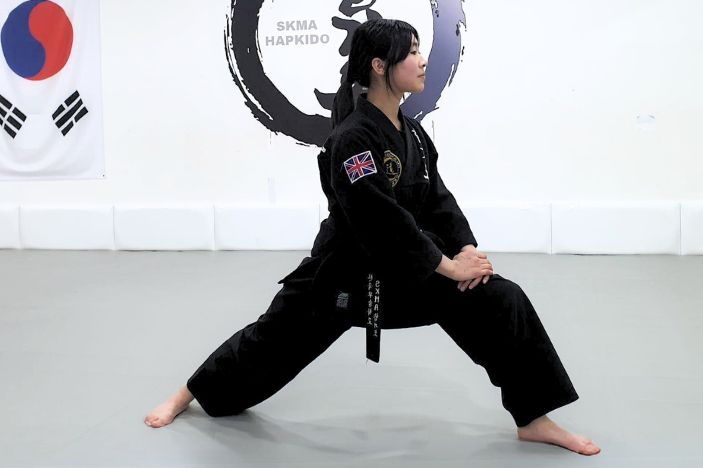
Warming up for Hapkido is as essential in the yellow belt as it is in any other belt. By now you should be familiar with this warm-up and can be confident that it will be the same right up to black belt. Warming up prevents injuries, improves performance, increases range of motion and flexibility and prepares you mentally for training. It also increases blood flow, raises body temperature, and loosens joints, reduces the risk of injuries. It optimises muscle performance, reaction time, and coordination. It helps mentally transition into training, improves concentration, and increases alertness. It enhances flexibility for techniques and reduces stress and anxiety. It is the first and the most important part of the training.
Green Belt Self-Defence Techniques
Punching Defence Blocks
Six Basic Blocks
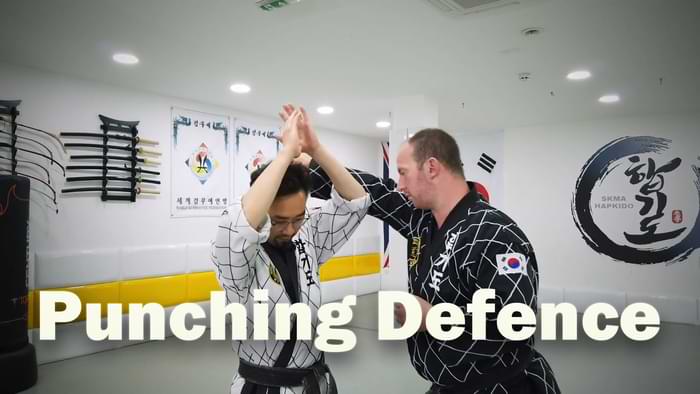
This video will focus on mastering six essential blocking techniques for defending against punches. It is crucial to grasp the fundamental concept of redirecting rather than opposing the force of our opponent's punch. Pay close attention to footwork and direction, which are vital in executing these blocks effectively. Throughout this training, you will learn the importance of stepping in the right direction while executing each block. You maintain control over the situation by redirecting your opponent's punch and neutralising their power. Remember, these basic blocks lay the foundation for your punching defence skills. Mastering these basic blocks will build a strong foundation for your Hapkido skills and enhance your ability to defend against punches.
Six Basic Blocks
This video will focus on mastering six essential blocking techniques for defending against punches. It is crucial to grasp the fundamental concept of redirecting rather than opposing the force of our opponent's punch. Pay close attention to footwork and direction, which are vital in executing these blocks effectively. Throughout this training, you will learn the importance of stepping in the right direction while executing each block. You maintain control over the situation by redirecting your opponent's punch and neutralising their power. Remember, these basic blocks lay the foundation for your punching defence skills. Mastering these basic blocks will build a strong foundation for your Hapkido skills and enhance your ability to defend against punches.
Block And Strike - The Basic 5
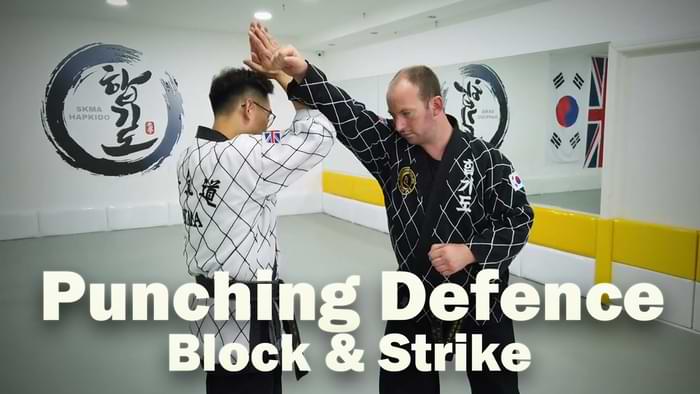
This video will explore five distinct block and strike techniques, each designed to counter punches from various directions. You will develop a solid foundation in punching defence by mastering these block and strike combinations. To begin, we will practice the outside block, using our right hand to block incoming punches and ending up positioning outside our opponent's body. Next, we will learn the inside block, utilising our left arm to block punches ending up positioning the inside of our opponent's body. It is important to note that when we refer to "inside" and "outside," we are referring to the positioning of our blocks in relation to our opponent's body. Furthermore, we will also practice the outside block with our left arm and the inside block with our right arm. These variations allow for versatility in adapting to different punch angles and directions. Lastly, we will incorporate footwork into our technique with the stepping shuffle back and strike technique.
Block and Strike Application
In addition to executing single strikes, we will also explore the concept of multiple strikes, reminiscent of the fluid movements seen in boxing combinations. As you progress in your training, it is important to understand that block and strike techniques can be seamlessly integrated. Like boxers who deliver a series of punches, such as the one-two combination or an uppercut followed by additional strikes, we can incorporate multiple strikes into our punching defence. While the primary focus remains on mastering the inside and outside blocks, we will also emphasise the application of consecutive strikes. This approach allows for a more dynamic and practical defence strategy without immediately transitioning into grabbing and executing techniques. By practising these block and multiple-strike combinations, you will develop a sense of fluidity, timing, and precision.
Block and Strike Application
In addition to executing single strikes, we will also explore the concept of multiple strikes, reminiscent of the fluid movements seen in boxing combinations. As you progress in your training, it is important to understand that block and strike techniques can be seamlessly integrated. Like boxers who deliver a series of punches, such as the one-two combination or an uppercut followed by additional strikes, we can incorporate multiple strikes into our punching defence. While the primary focus remains on mastering the inside and outside blocks, we will also emphasise the application of consecutive strikes. This approach allows for a more dynamic and practical defence strategy without immediately transitioning into grabbing and executing techniques. By practising these block and multiple-strike combinations, you will develop a sense of fluidity, timing, and precision.
Punching Defence Outside
Knife and Cradle
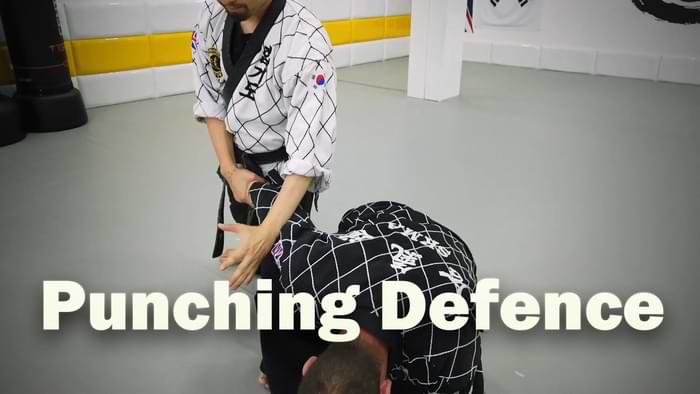
This session will focus on applying outside techniques in punching defence, specifically the Knife and Cradle techniques. You first learned fundamental techniques during your White Belt training as pre-emptive attacks, and now we will explore their utilisation in punching defence scenarios. Referring to "outside" signifies moving away from your opponent's punch, creating space to counter their attack effectively. The Knife technique involves swiftly grabbing your opponent's arm from the outside and applying pressure to their joints to neutralise the pressure point to control your opponent's arm. On the other hand, the Cradle technique emphasises securing your opponent's arm and controlling their movements, creating an advantageous position for your defence.
Playstation 1 and Wrist Twist
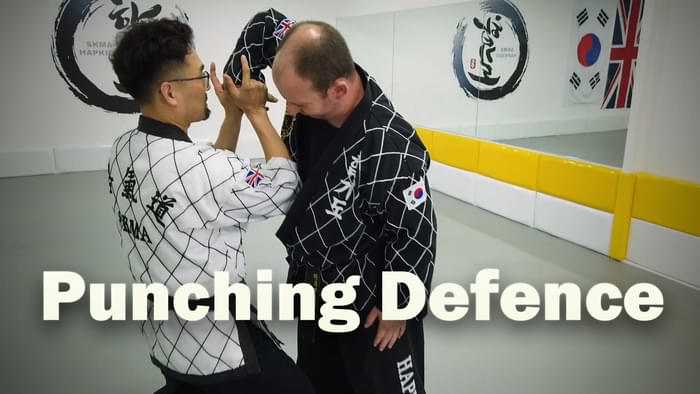
This video will explore two effective outside techniques in punching defence: the PlayStation 1 and the Wrist Twist. These techniques build upon the foundational skills you learned in White Belt but with a different application and approach. The Playstation 1 technique involves utilising pre-emptive attacks to intercept your opponent's punch, effectively redirecting their attack and creating an opening for your defence. This technique emphasises the importance of proper timing and positioning to neutralise the punch effectively. On the other hand, the Wrist Twist technique focuses on applying a wrist lock by twisting your opponent's wrist. Pay close attention to how you grab your opponent's hands, as it plays a crucial role in executing the twist and effectively immobilising your opponent's wrist.
Playstation 1 and Wrist Twist
This video will explore two effective outside techniques in punching defence: the PlayStation 1 and the Wrist Twist. These techniques build upon the foundational skills you learned in White Belt but with a different application and approach. The Playstation 1 technique involves utilising pre-emptive attacks to intercept your opponent's punch, effectively redirecting their attack and creating an opening for your defence. This technique emphasises the importance of proper timing and positioning to neutralise the punch effectively. On the other hand, the Wrist Twist technique focuses on applying a wrist lock by twisting your opponent's wrist. Pay close attention to how you grab your opponent's hands, as it plays a crucial role in executing the twist and effectively immobilising your opponent's wrist.
Inner Turn Takedown
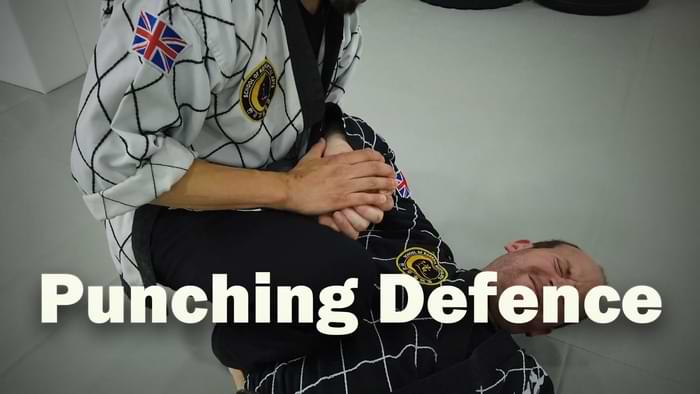
This video will teach outside punching defence techniques called the Inner Turn Takedown. This technique focuses on moving towards the inside, positioning yourself between your opponent's punching arm and body, and twisting to destabilise and take down your opponent. Practising the Inner Turn Takedown will enhance your ability to neutralise your opponent's strength while simultaneously breaking their balance. This technique is a valuable tool in punching defence, allowing you to effectively control the situation and minimise the threat posed by your opponent's punches. Pay close attention to your body positioning and the execution of the twisting motion. Maintaining proper balance and control is key to successfully executing the Inner Turn Takedown.
Punching Defence Outside Revision
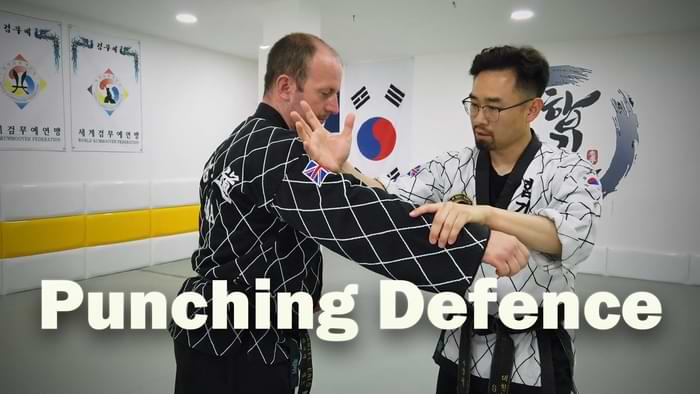
Welcome to this revision video, where we will recap all five punching defence techniques taught in the previous sessions: Knife, Cradle, Playstation 1, Wrist Twist, and Takedown. If you are short on time and need a quick refresher, this video will help you practice and reinforce your skills. Each technique plays a vital role in countering and neutralising punches, ensuring your ability to defend yourself in real-life situations. Remember, mastering the basics is crucial before advancing to more complex applications.
Punching Defence Outside Revision
Welcome to this revision video, where we will recap all five punching defence techniques taught in the previous sessions: Knife, Cradle, Playstation 1, Wrist Twist, and Takedown. If you are short on time and need a quick refresher, this video will help you practice and reinforce your skills. Each technique plays a vital role in countering and neutralising punches, ensuring your ability to defend yourself in real-life situations. Remember, mastering the basics is crucial before advancing to more complex applications.
Punching Defence Inside
Knife and Rowing
This video will focus on inside punching defence techniques, specifically the Knife and Rowig techniques. These techniques allow for effective defence when you position yourself inside your opponent after blocking. The Knife technique involves strikingly motions with your hand, targeting your opponent's bicep. By delivering a sharp shock to this muscle, you can disrupt their balance and create an opportunity for a takedown. Next, we have the Rowing technique, which resembles the motion of a large ship rowing on the waves. You must lift your opponent's arm while taking a deep and wide step to execute this technique successfully. Emphasise the importance of performing a full circular motion to ensure a powerful takedown. Both techniques require practice and a focus on proper form and body positioning.
Forward Cradle and Playstation 2
This video will cover two essential techniques: the Forward Cradle and PlayStation 2. The Forward Cradle technique builds upon the fundamental cradle technique. However, we will execute the forward cradle instead of turning next to your opponent and facing the same direction. This variation involves pushing your opponent forward, using their momentum against them. Next, we have the PlayStation 2 technique, an extension of the forward Cradle technique. While it may appear similar, the PlayStation 2 technique emphasises your footstep and momentum to control and manipulate your opponent's movements. Both techniques require practice and attention to detail.

Neck & Knee and Turn & Takedown
This video will delve into two dynamic kicks: the jumping front and turning kick. When performed with a kick shield, these kicks can significantly enhance your self defense skills. The jumping front and turning kick involve leaping into the air and executing two kicks. This kick can effectively surprise and disorient your opponent in real-life situations. Aim your kicks towards the belly, face or side of the body, targeting vital areas such as the ribs. Performing this kick requires excellent body coordination and control. When executing the turning kick, pay close attention to the angle of your foot and ankle. Proper alignment is crucial to ensure both effectiveness and safety. Practice repeatedly to develop the necessary coordination and technique for this powerful kick.
Punching Defence Inside Revison
Welcome to this revision video, where we will recap all six inside defence techniques taught in the previous sessions: Knife, Rowing, Forward Cradle, PlayStation 2, Neck & Knee and Turn & Takedown. If you are short on time and need a quick refresher, this video will help you practice and reinforce your skills. Each technique plays a vital role in countering and neutralising punches, ensuring your ability to defend yourself in real-life situations. Remember, mastering the basics is crucial before advancing to more complex applications.
Punching Defence Inside Revison
Welcome to this revision video, where we will recap all six inside defence techniques taught in the previous sessions: Knife, Rowing, Forward Cradle, PlayStation 2, Neck & Knee and Turn & Takedown. If you are short on time and need a quick refresher, this video will help you practice and reinforce your skills. Each technique plays a vital role in countering and neutralising punches, ensuring your ability to defend yourself in real-life situations. Remember, mastering the basics is crucial before advancing to more complex applications.
Hapkido Kicks
Kicks with a Kick Shield
Front kick
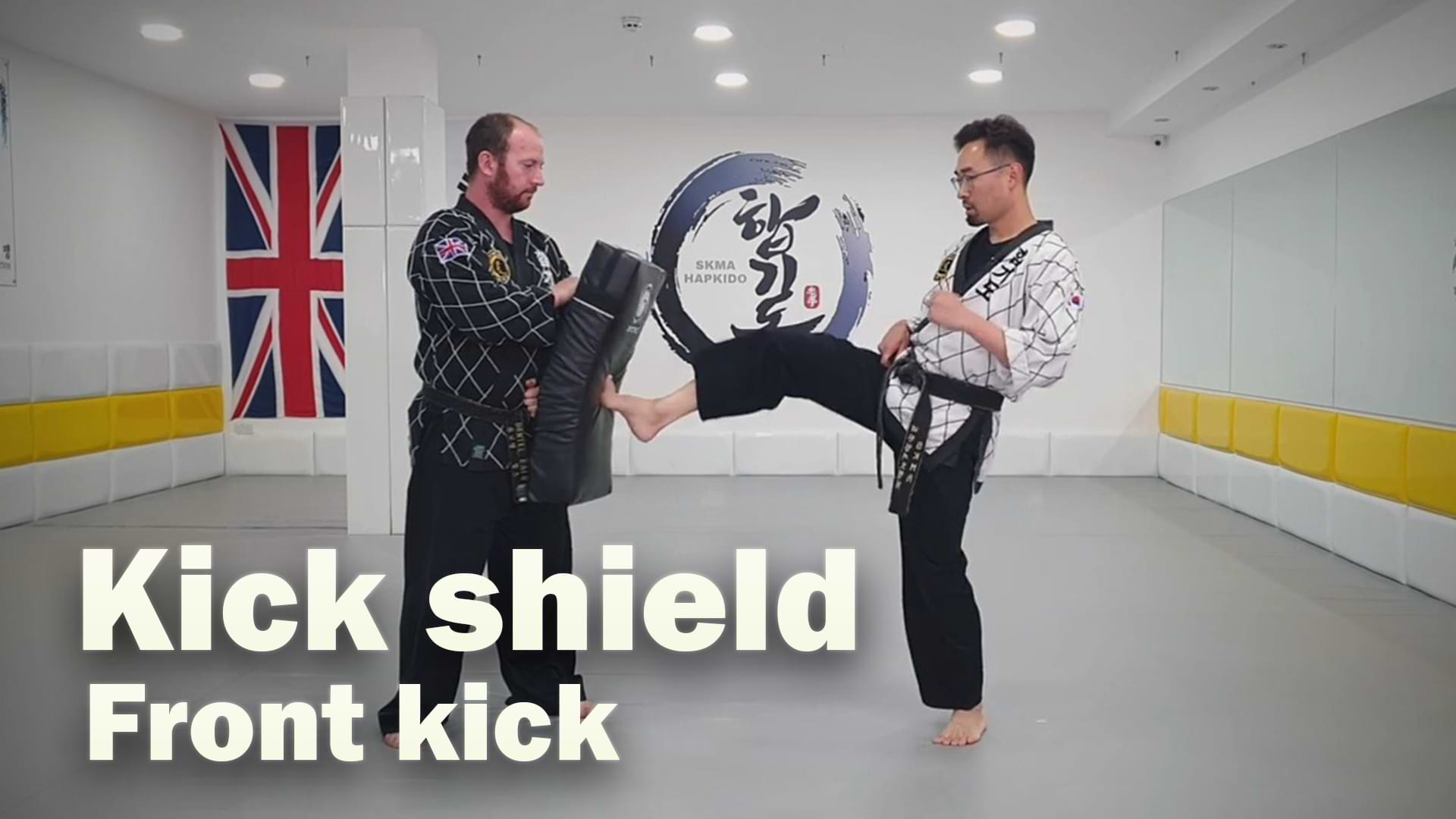
In this video, we will focus on the front kick, one of hapkido's most practical kicks. The beauty of this kick lies in its simplicity and effectiveness, making it suitable for practitioners of all levels. Not only does it not require excessive flexibility, but it also provides a powerful strike to your opponent's midsection. However, there is a crucial detail to keep in mind when executing the front kick. It is essential to strike with the ball of your foot. This proper form ensures maximum impact and minimises the risk of injury. Use a shield to simulate real-life scenarios and enhance your accuracy and power.
Back kick
In this video, we will focus on the back kick, which is known for its power and practicality in Hapkido. Unlike some other kicks, the back kick does not require excessive flexibility. However, it does require proper body coordination and technique to execute effectively. Imagine it as a powerful kick similar to that of a horse or a donkey. As you turn your body, look behind you and lift your leg up, aiming to strike with your heel. The heel provides a solid impact point that can deliver significant force to your opponent. Practice this kick repeatedly to develop accuracy, power, and muscle memory.
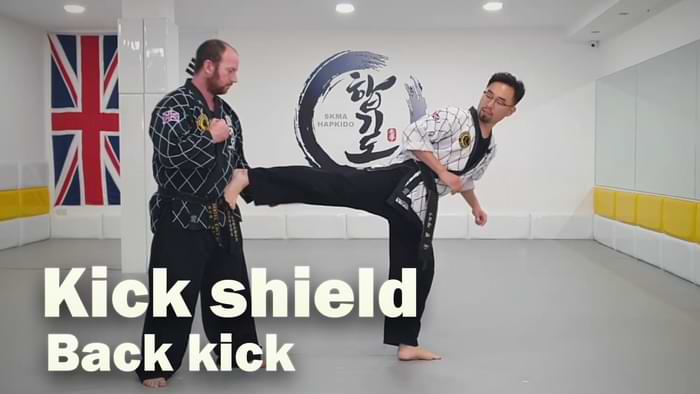
Back kick
In this video, we will focus on the back kick, which is known for its power and practicality in Hapkido. Unlike some other kicks, the back kick does not require excessive flexibility. However, it does require proper body coordination and technique to execute effectively. Imagine it as a powerful kick similar to that of a horse or a donkey. As you turn your body, look behind you and lift your leg up, aiming to strike with your heel. The heel provides a solid impact point that can deliver significant force to your opponent. Practice this kick repeatedly to develop accuracy, power, and muscle memory.
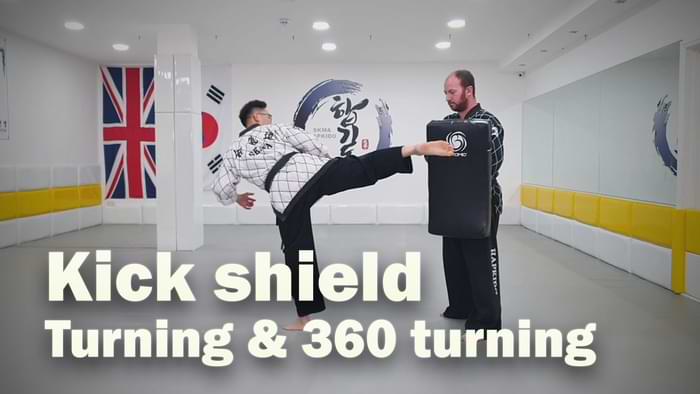
Turning Kick & 360 Turning Kick
In this session, we will focus on two dynamic kicks: the turning kick and the 360 turning kick. While these kicks may seem effortless when executed in the air, it is important to exercise caution when performing them with a kick shield. When executing the turning kick, pay close attention to the angle of your foot and ankle. Instead of kicking with the delicate parts of your foot, aim to strike the kick shield with the flat surface of your ankle or the top of your foot. This proper alignment minimizes the risk of ankle or toe injuries. If you feel confident and have mastered the turning kick, you can progress to the more advanced 360 turning kick. This kick involves executing a full revolution in the air while striking the kick shield. The same principles apply: maintain proper foot and ankle alignment to prevent unnecessary injuries.
Jumping Front and Turning Kick
This video will delve into two dynamic kicks: the jumping front and turning kick. When performed with a kick shield, these kicks can significantly enhance your self defense skills. The jumping front and turning kick involve leaping into the air and executing two kicks. This kick can effectively surprise and disorient your opponent in real-life situations. Aim your kicks towards the belly, face or side of the body, targeting vital areas such as the ribs. Performing this kick requires excellent body coordination and control. When executing the turning kick, pay close attention to the angle of your foot and ankle. Proper alignment is crucial to ensure both effectiveness and safety. Practice repeatedly to develop the necessary coordination and technique for this powerful kick.
Kicks Revision
This video has compiled all the kicks necessary for your examination, providing you with a comprehensive review. It is important to note that these revision videos should be watched after completing the section details. Watching them only after completing the previous kicks lessons may cause you to overlook important finer details and close-ups essential for correctly understanding the techniques. Additionally, this video can be incorporated into your regular cardio exercise routine. Following along and practising the kicks can improve your cardiovascular fitness while honing your martial arts skills. Remember to approach these revision videos with a focused mindset and attention to detail, as they are designed to enhance your understanding and proficiency. Use this resource effectively to maximise the benefits of your training and examination preparation.
Breakfalls
Rolling Backwards Both Sides
In this video, Master Sung will provide detailed instructions on how to perform this technique safely. Utilising momentum correctly is crucial, as improper execution can be risky. You will learn how to position your body, ensuring that both legs roll over to one side while protecting your neck. Pay close attention to the instructions provided, watching the demonstration carefully. It is important to follow the steps precisely, maintaining control and stability throughout the roll. Practising diligently and mastering the technique on both sides will build confidence and increase your ability to execute a safe and effective backward roll. Learning to roll backwards on both sides is a valuable skill in Hapkido.
Rolling Backwards Both Sides
In this video, Master Sung will provide detailed instructions on how to perform this technique safely. Utilising momentum correctly is crucial, as improper execution can be risky. You will learn how to position your body, ensuring that both legs roll over to one side while protecting your neck. Pay close attention to the instructions provided, watching the demonstration carefully. It is important to follow the steps precisely, maintaining control and stability throughout the roll. Practising diligently and mastering the technique on both sides will build confidence and increase your ability to execute a safe and effective backward roll. Learning to roll backwards on both sides is a valuable skill in Hapkido.
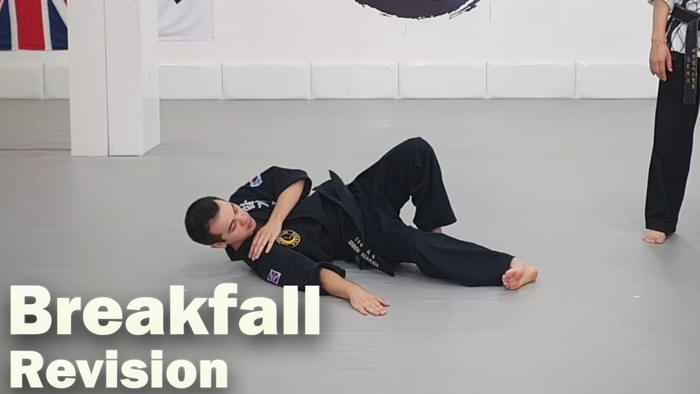
Breakfall Revision
This video will focus on revisiting and refining the breakfall techniques you learned in previous courses. As you progress to Senior Green Belt, it is crucial to polish and practice these breakfalls consistently. By now, you should be familiar with all the fundamental breakfalls. However, the aim at this stage is to develop muscle memory. The execution of breakfalls should become instinctual, without the need for conscious thinking. Your body should react automatically to protect itself when faced with the need to break a fall. Over time, you will achieve a level of proficiency where breakfalls become second nature.
Exam Preparation
Green Belt Exam Preparation
To prepare for your examination, cover grading requirements, techniques, kicks, and breakfalls. Know the criteria for your level, revise techniques with proper execution, and focus on kicks and combinations. Film the entire body, demonstrate with a partner safely, and send the videos in MP4 format to Master Sung.
You've got this!
Green Belt Exam Preparation
To prepare for your examination, cover grading requirements, techniques, kicks, and breakfalls. Know the criteria for your level, revise techniques with proper execution, and focus on kicks and combinations. Film the entire body, demonstrate with a partner safely, and send the videos in MP4 format to Master Sung.
You've got this!